|
|||
Click the image below for engine pictures
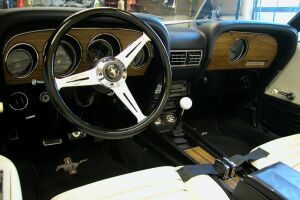
Click the image below for interior pictures
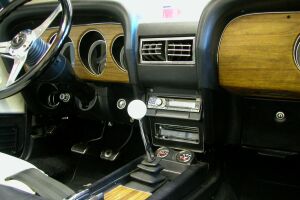
Click the image below for stereo pictures
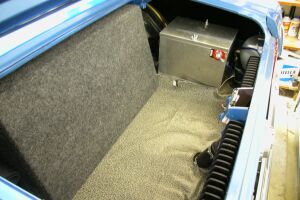
Click the image below for trunk pictures
Click the image below for suspension pictures
Click the image below for wheel & brake pictures
Click the image below for general shots of the car.
|

|
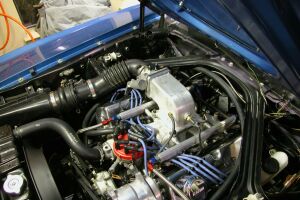
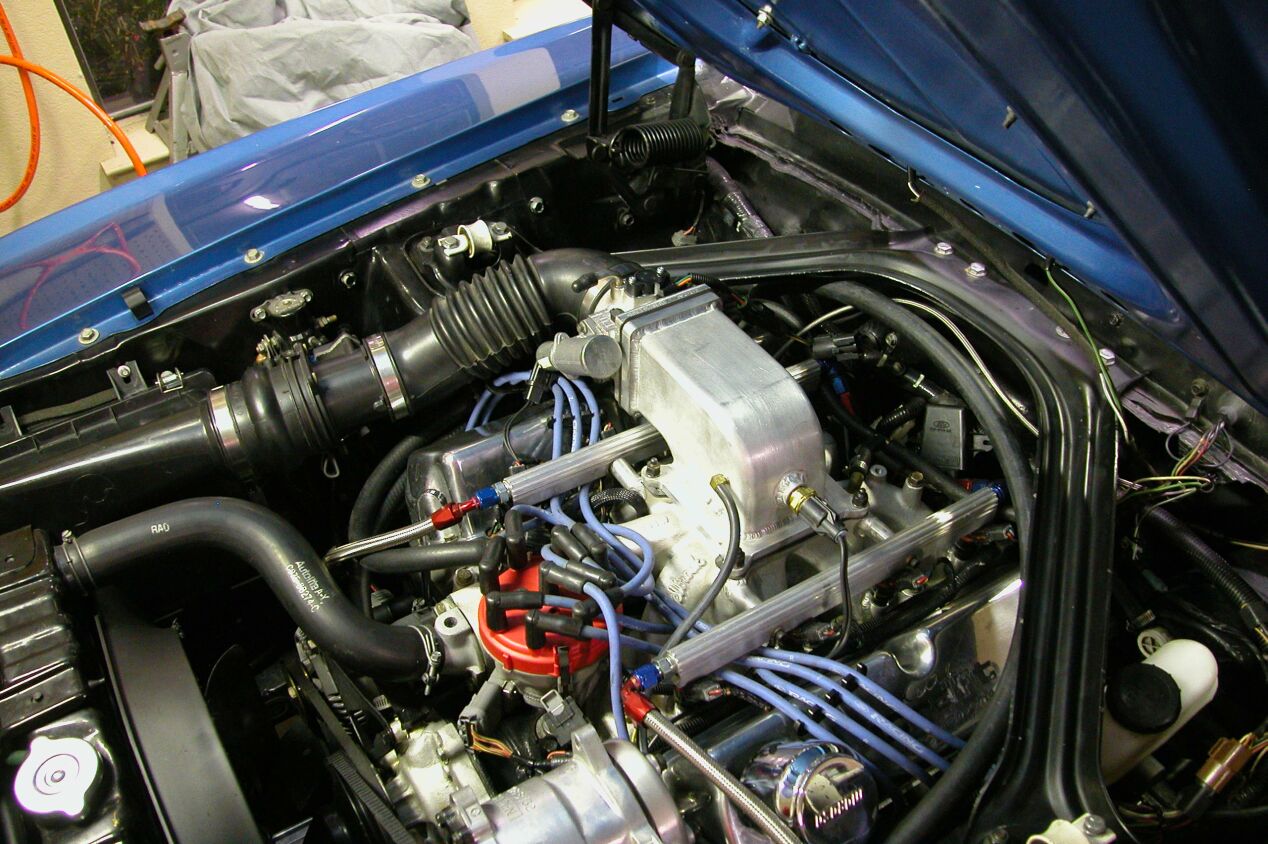
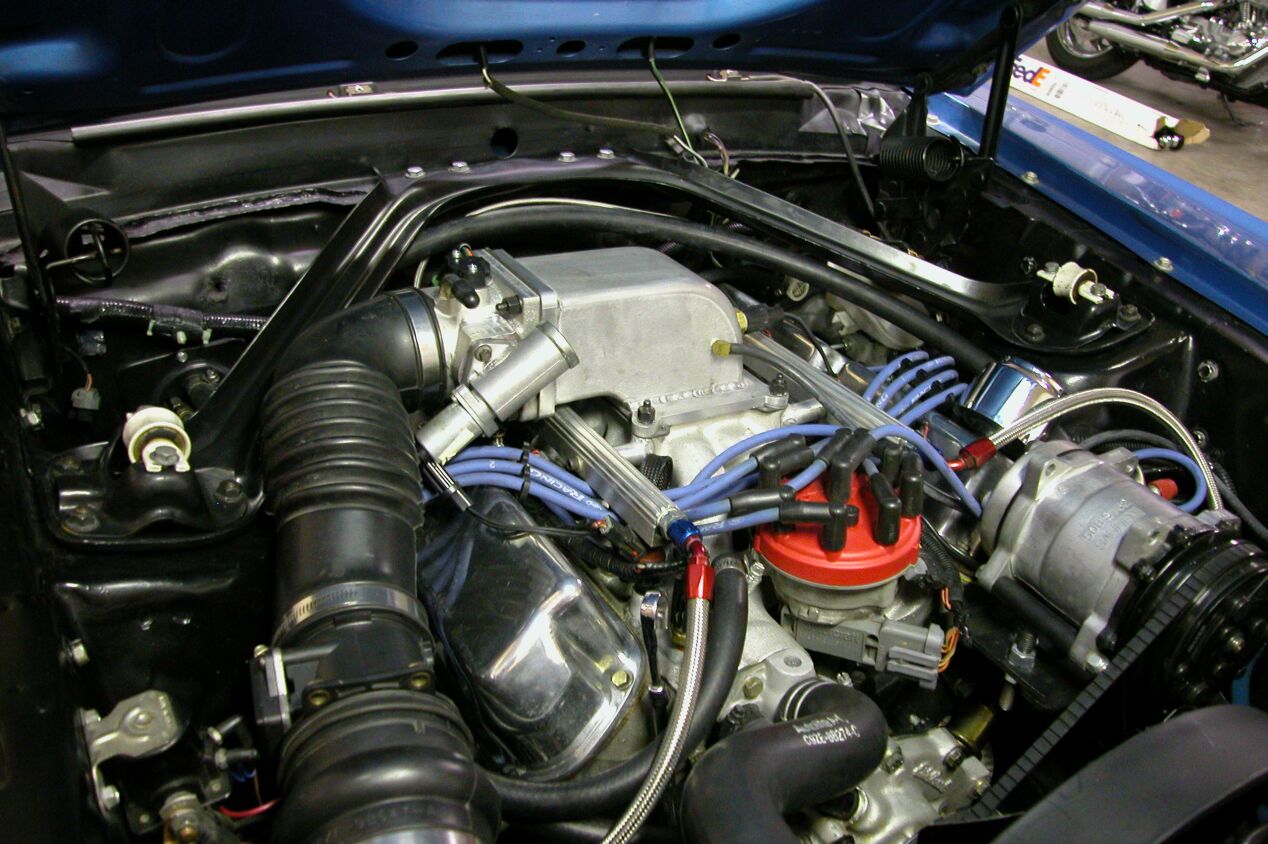
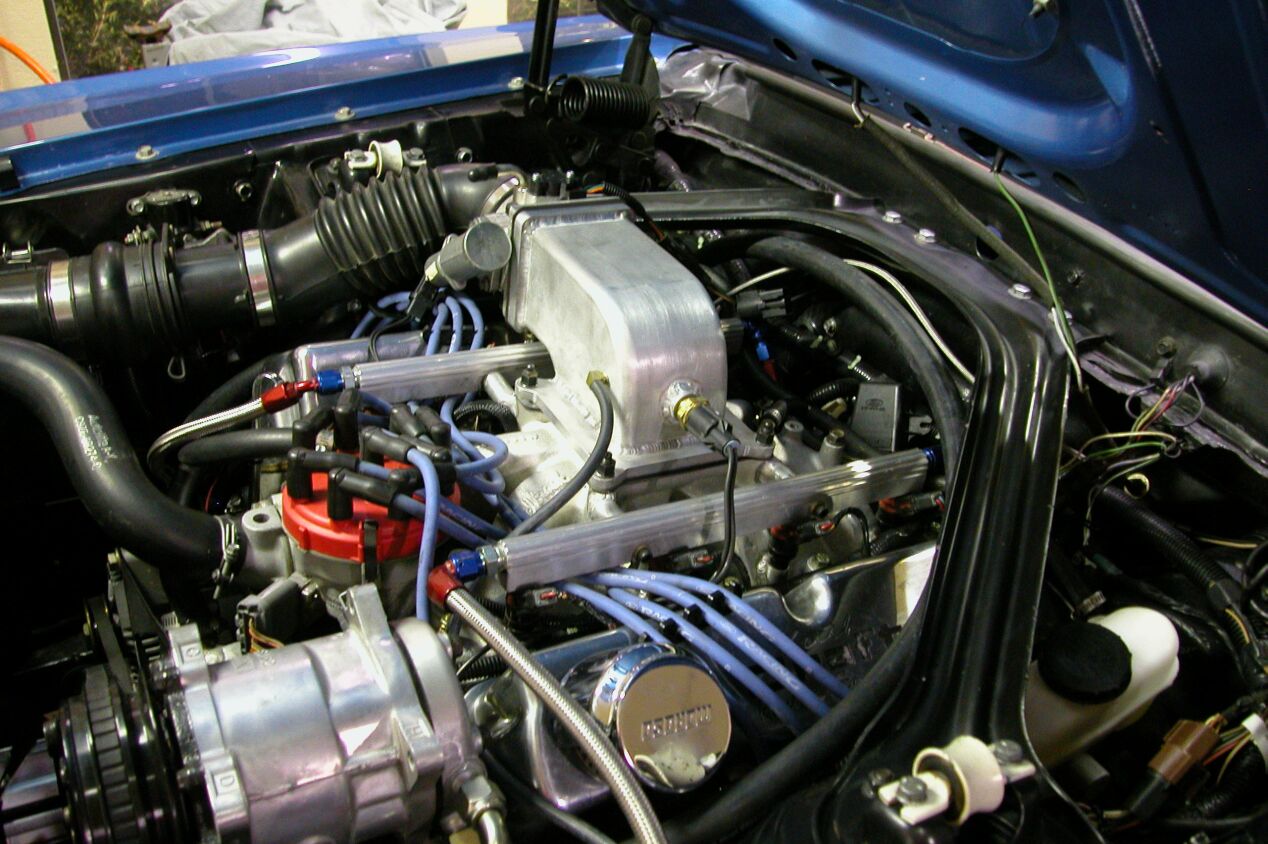
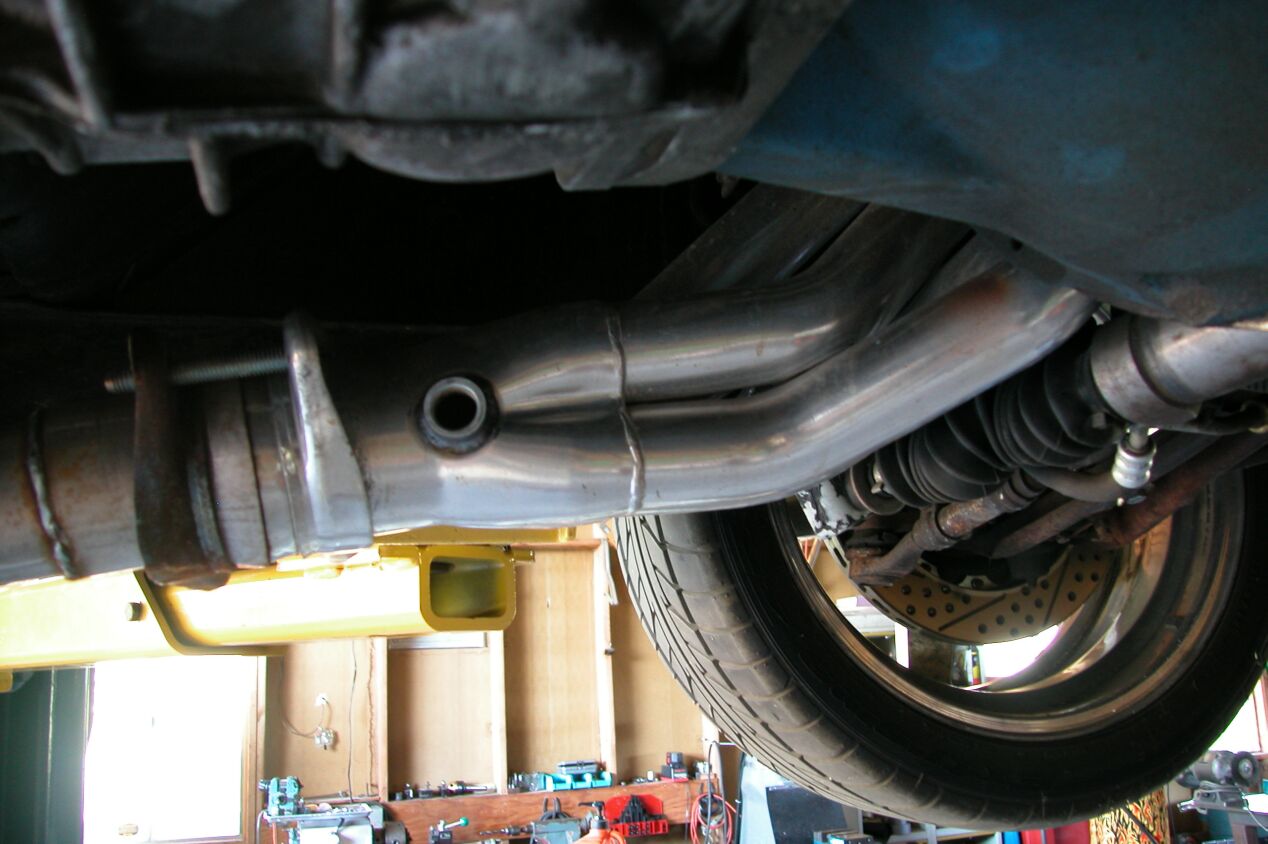
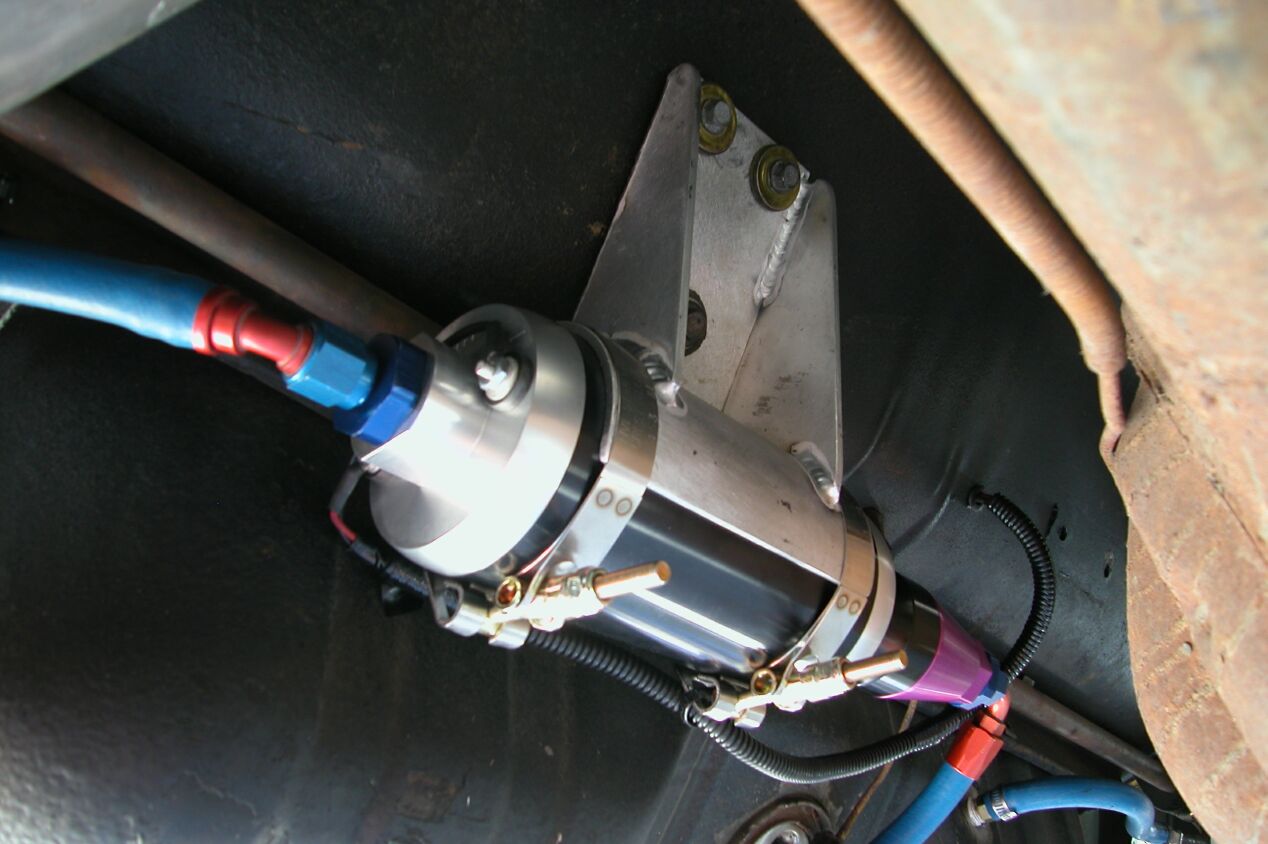
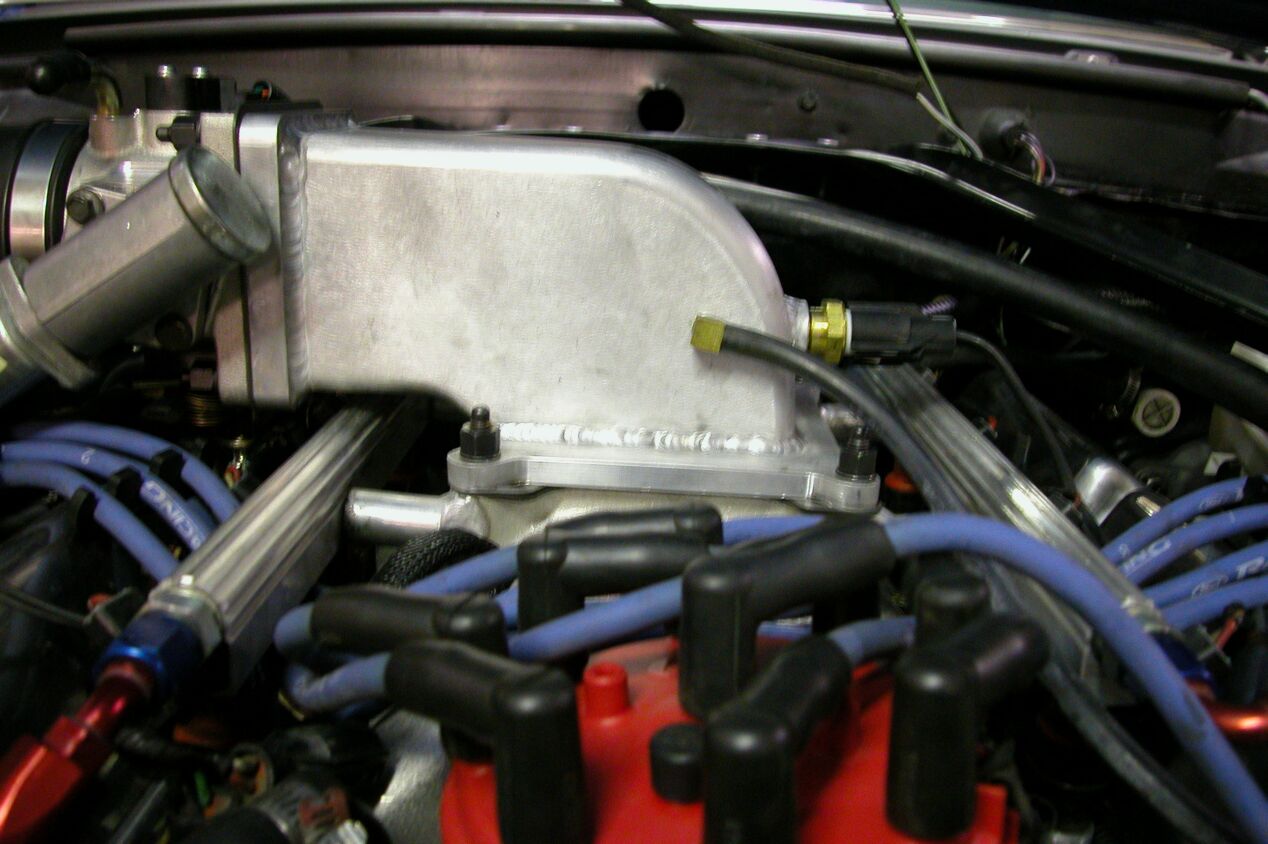
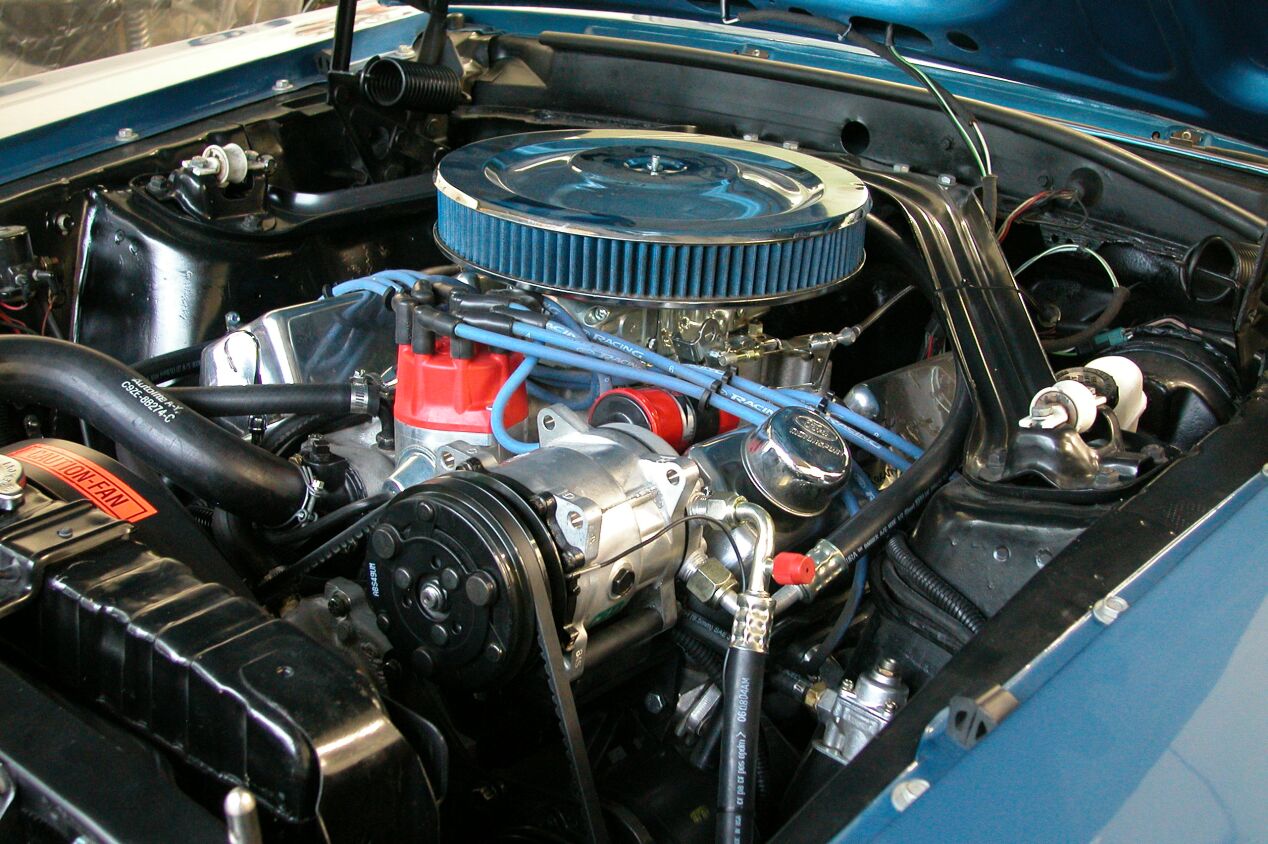
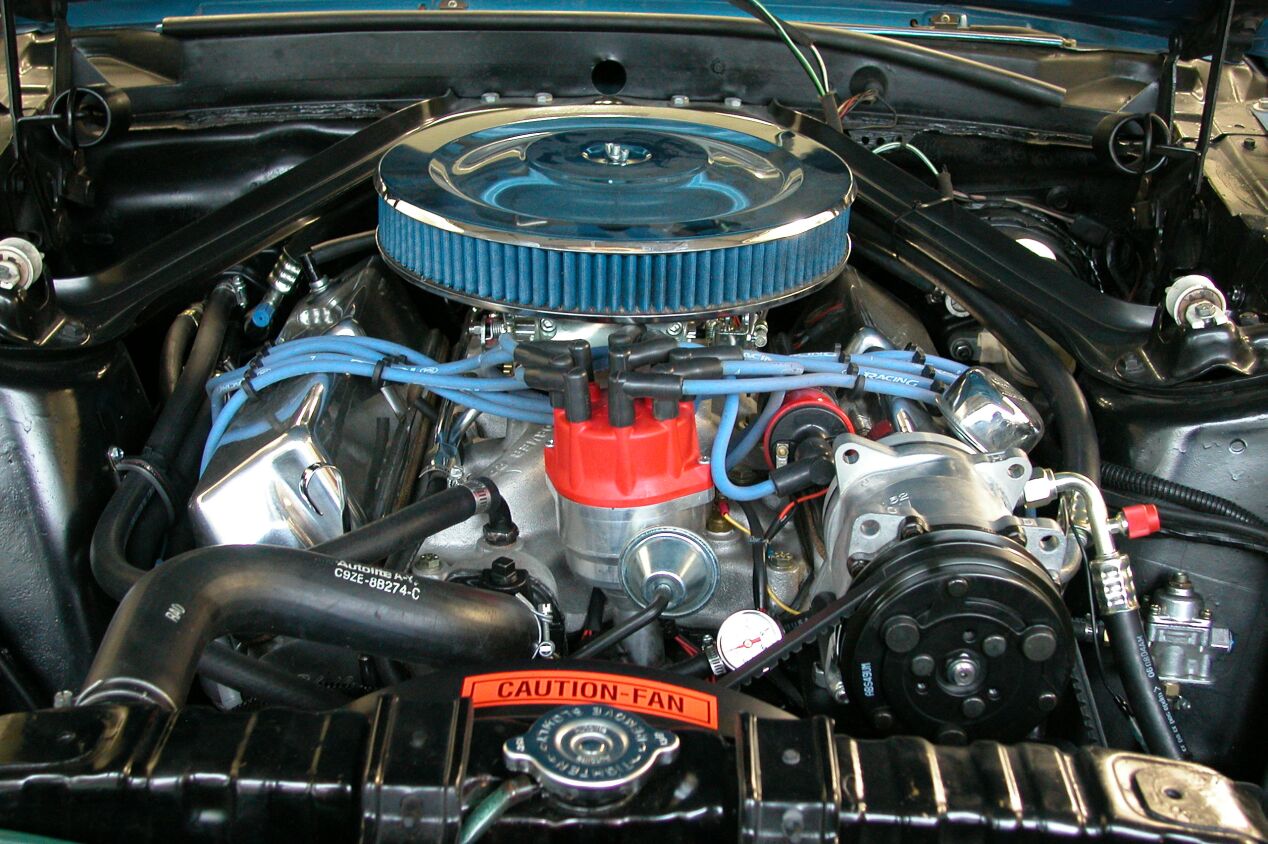
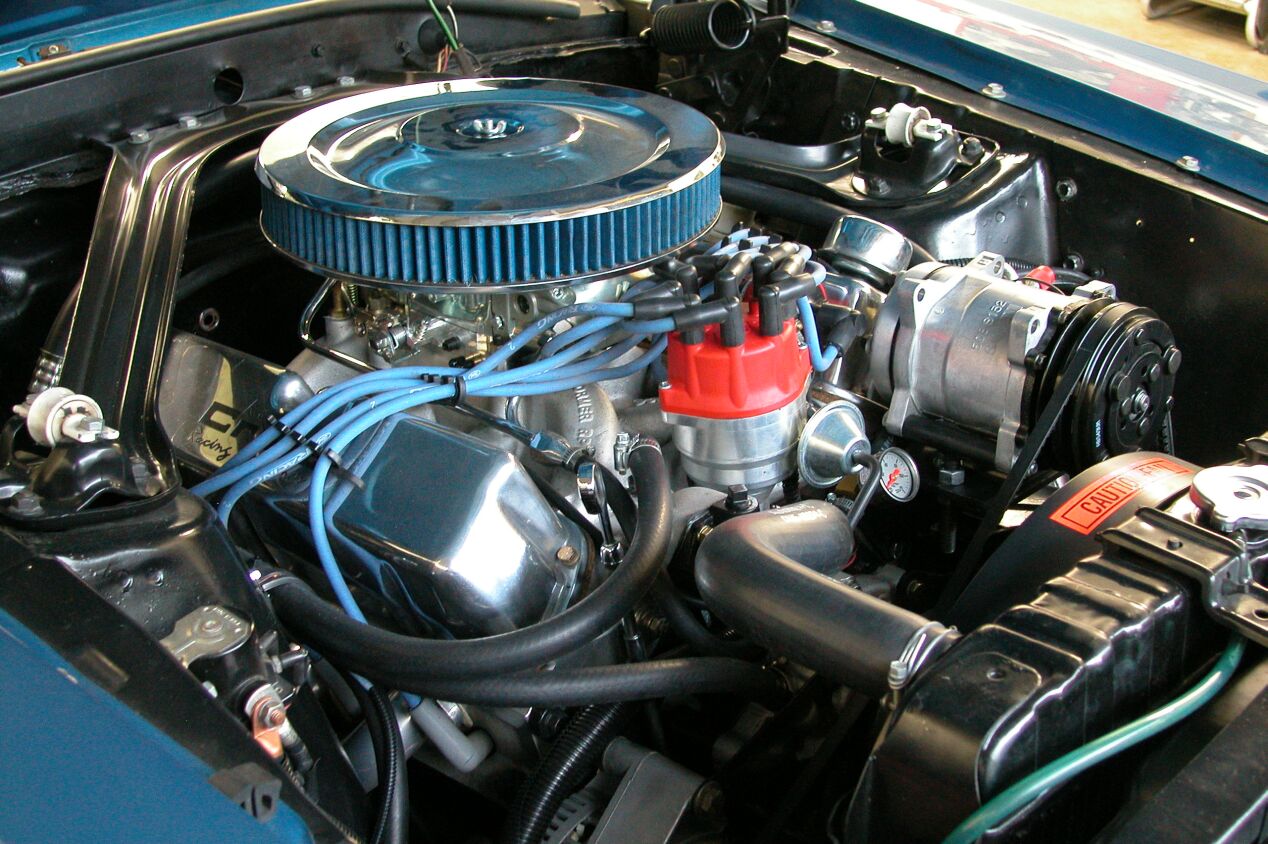
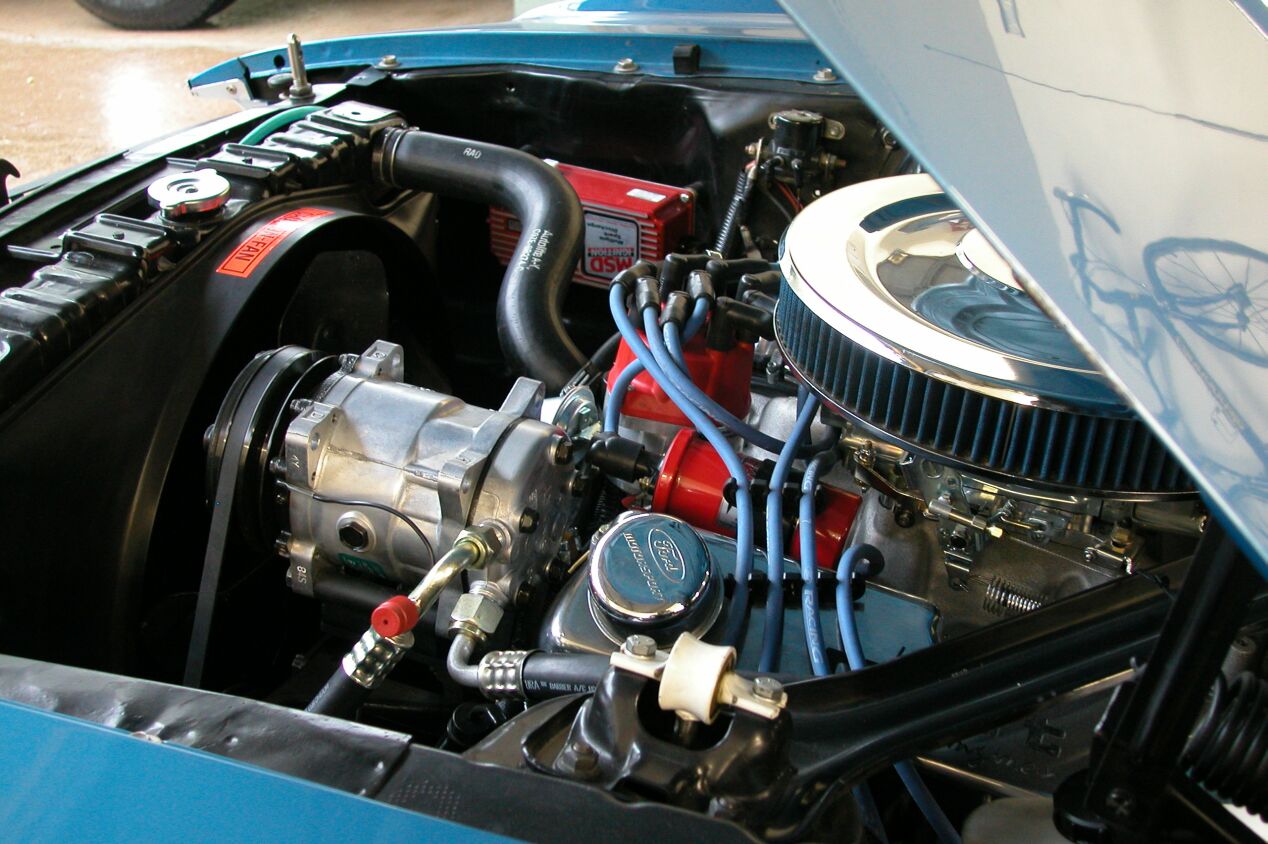
ENGINE PICTURES1969 Ford Mustang Convertible 408 c.i. Windsor Engine - Built by Keith Craft Racing in Arkadelphia Arkansas. Keith has been a friend of mine for about 20 years. I met him when he was racing an NHRA Stock Eliminator Mustang and I had a Mustang bracket racer. Keith had built the heads on my race car, so when it came time for the engine for this car, I gave him a call. Keith is very good to work with and can tailor the engine to your needs. I wanted something that would run like crazy, but still allow power brakes and air conditioning. May 2005, As you can see, I have added Fuel Injection to the car. Assisting me with this mod was Bart Spivey of Barts Works in Phoenix Arizona. Bart is a fabricator by trade and he built all the custom parts for the engine and made the mount for the fuel pump. The difference is amazing in terms of drivability, cold starting etc. And......the power is always there! It uses an Edelbrock Throttle Body and a C&L mass air meter. The wiring harness, computer etc are all stock Mustang items. Scroll down a bit and you will see the dyno results of carbureted vs Injected. Clicking on the images below will enlarge the shots
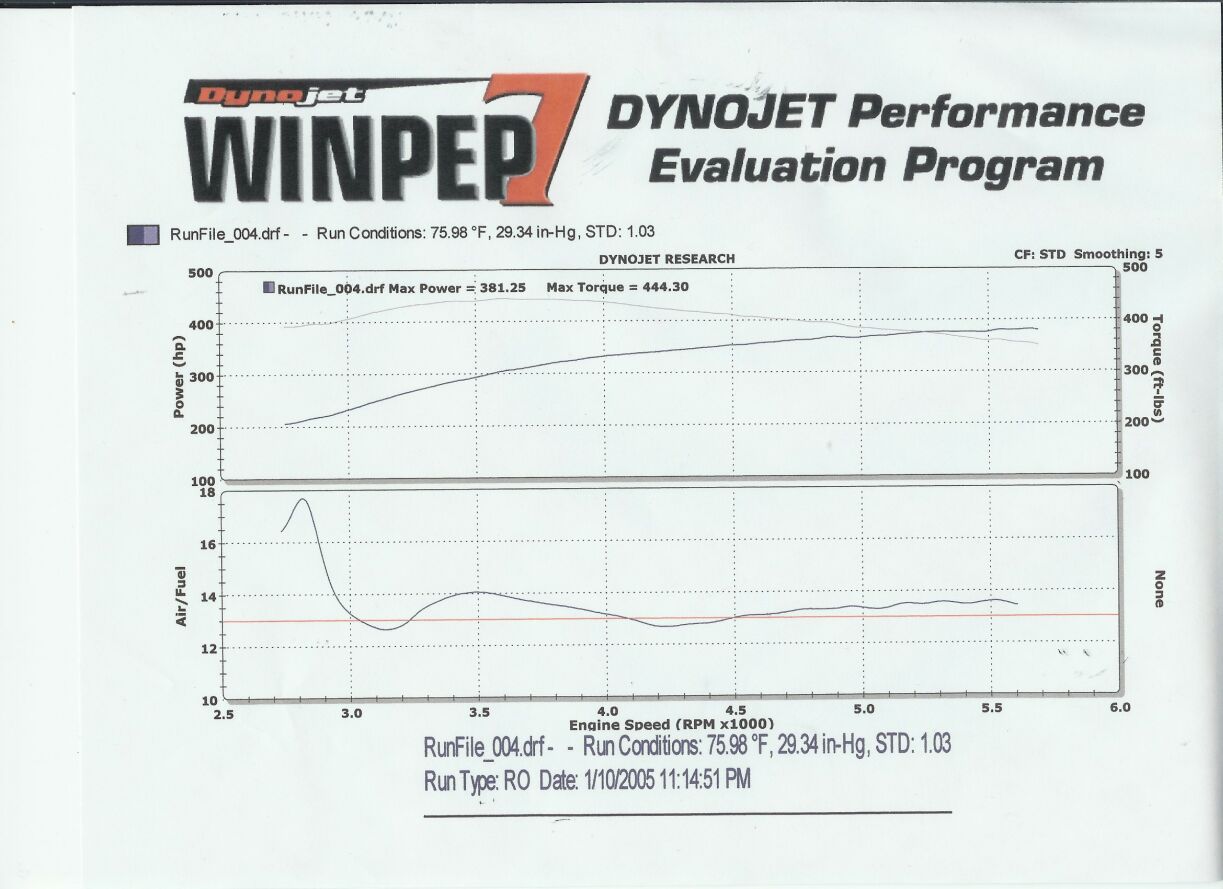
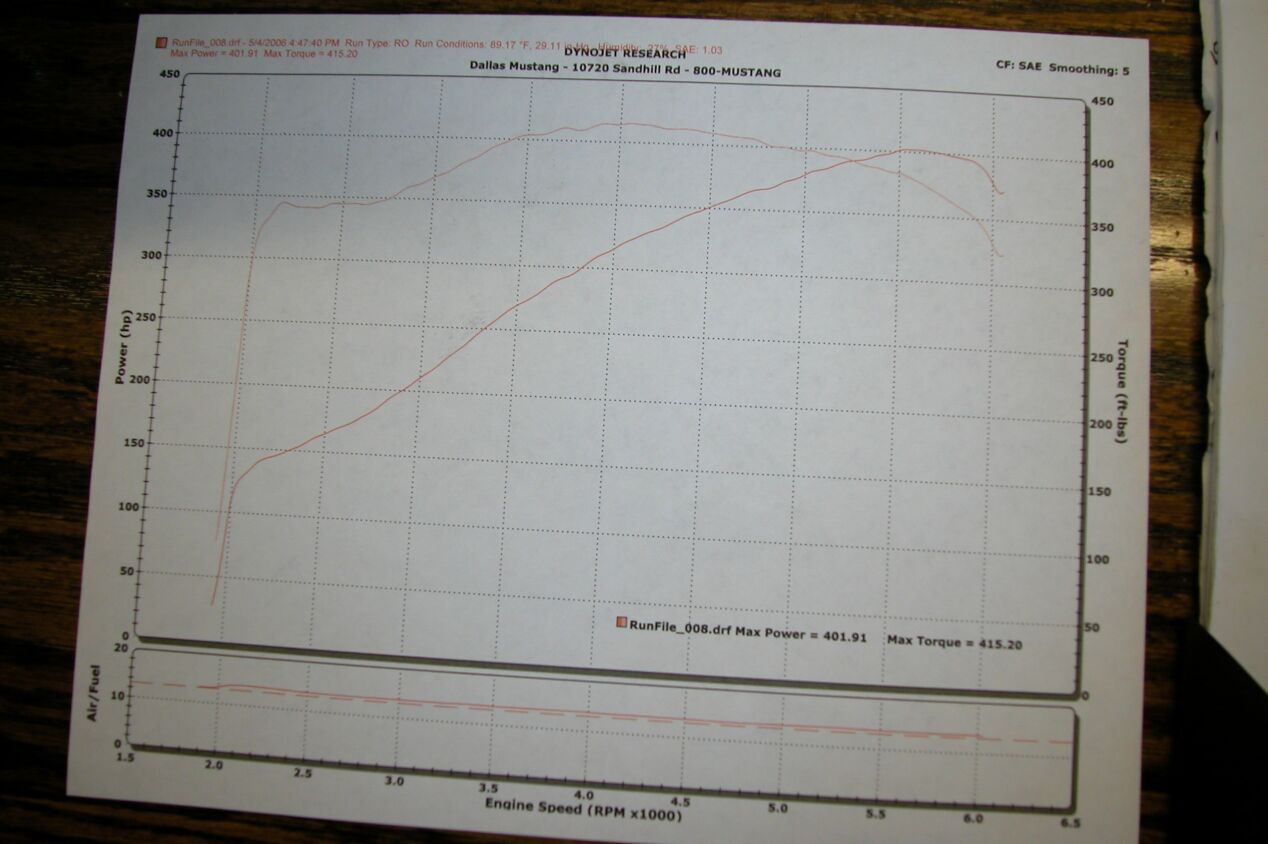
I Carbureted - 381 H.P. 444 Ft. Lbs Torque at the rear wheels
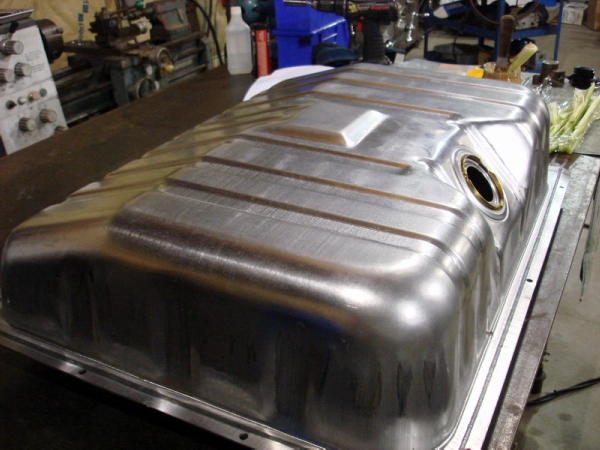
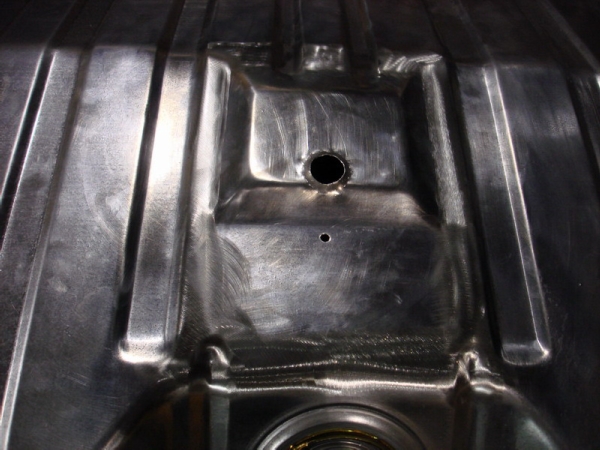
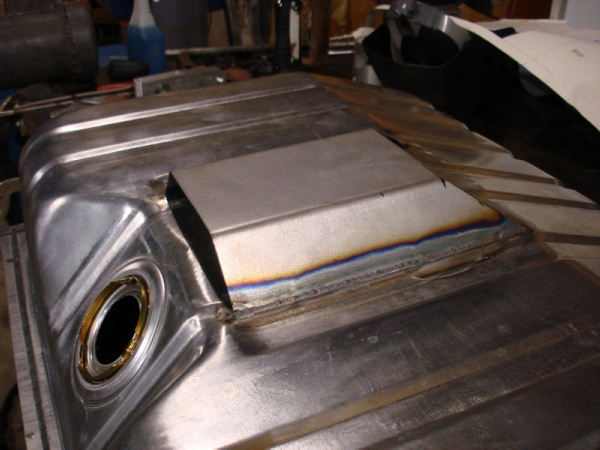
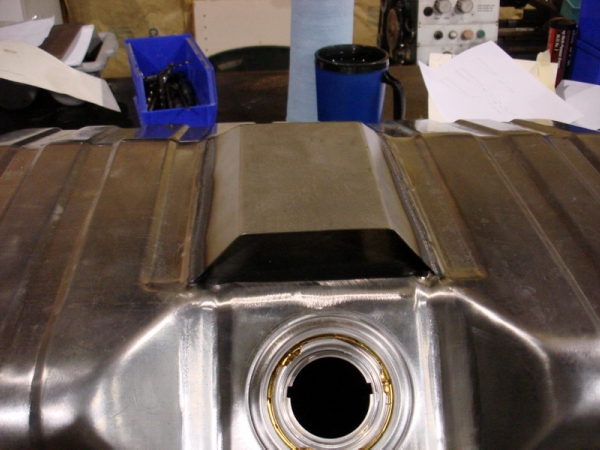
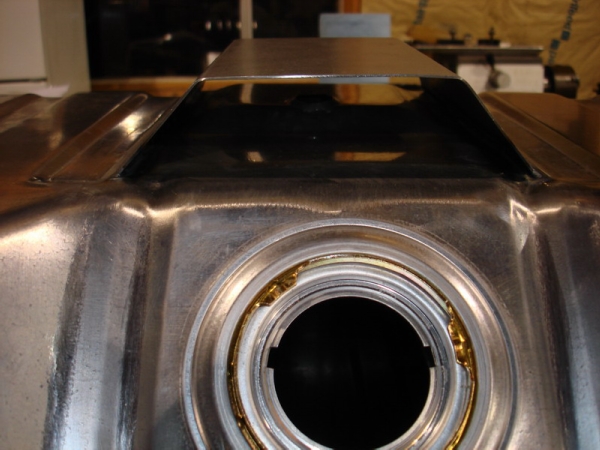
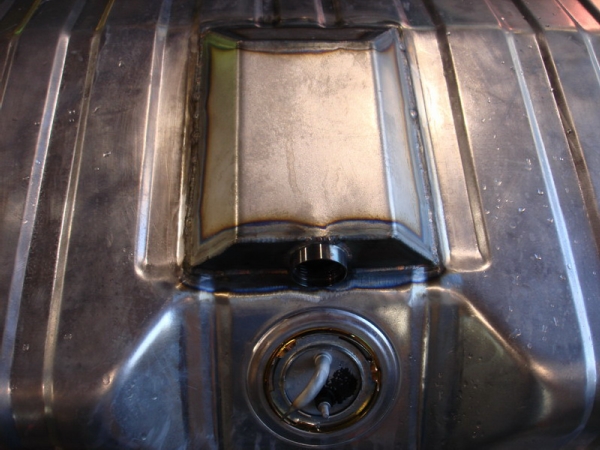
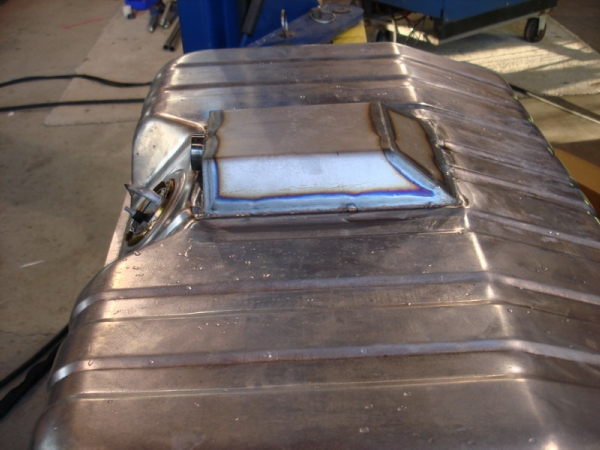
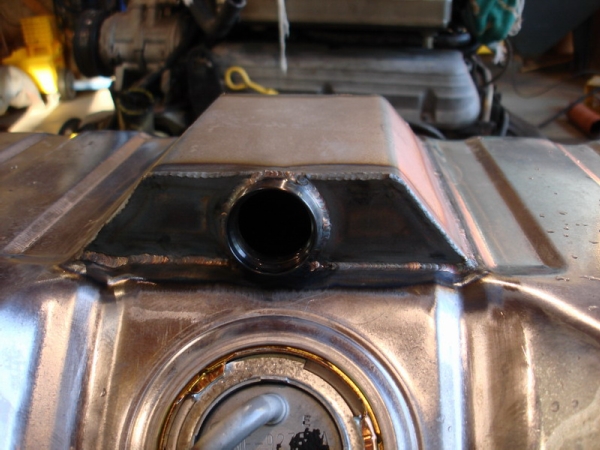
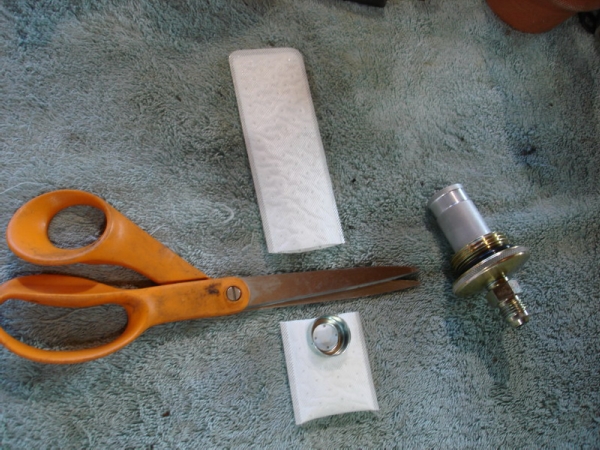
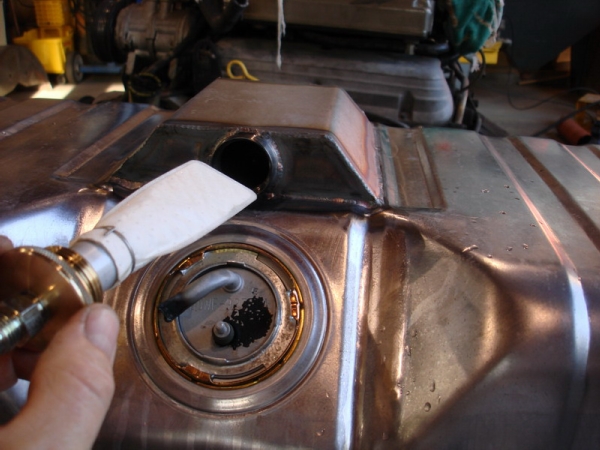
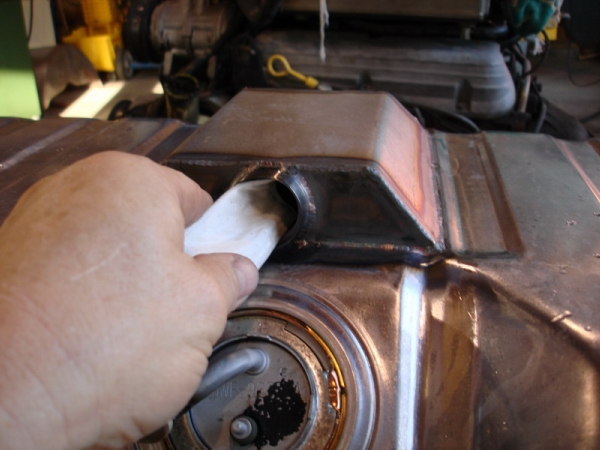
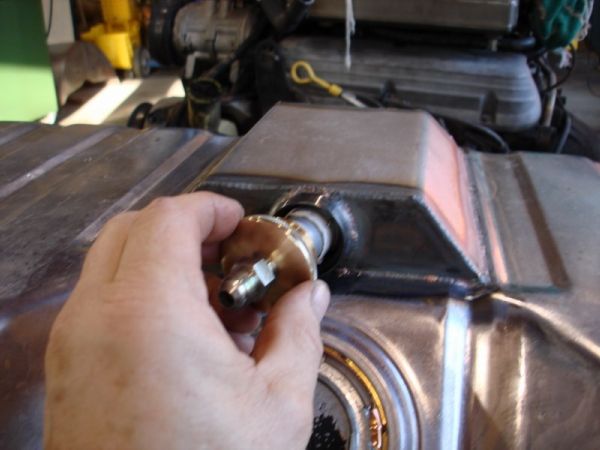
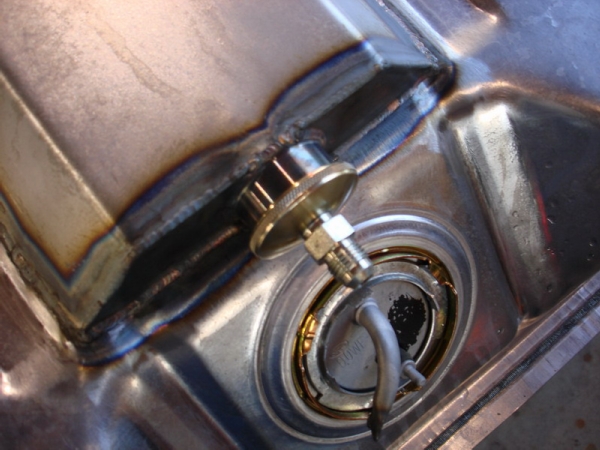
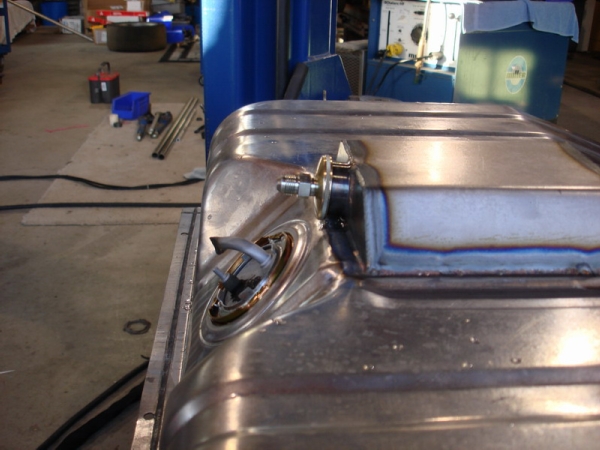
Injected - 402 H.P. 415 Ft. Lbs Torque at the rear wheels You might ask why the decrease in Torque? It was 10 degrees hotter on the injected dyno run, plus I went from a dual-plane intake to a single-plane variety. If you look under the hood of modern FI cars, you will see an elaborate intake plenum system (long) that is necessary to build torque. No matter, the FI is the way to go. Instant cold starting, Idles perfect even with the A/C on and great throttle response. If you take a look at the fuel ratio curves on these two dyno runs, you can see that the carbureted run varies quite a bit from optimum, where the FI air/fuel ratio stays exactly on the perfect ratio. --------------------------------------------------------- The next problem you will encounter when you fuel inject an early car will be that it when you get down to about a 1/4 tank of fuel, and under heavy acceleration or cornering, the pickup tube will get uncovered and you will lose fuel pressure until the fuel sloshes back down to the center of the tank. On a carbureted car, you have the value of the fuel bowls holding gas, and with FI, you don't. Even if you put in a fuel cell with foam, the fuel will still move away from the pickup tube. On FI cars, I guess they are all more vertically oriented, and also the pump is situated in the bottom of the tank in a sump. Here are pictures of the cure. We took a new fuel tank and added a sump to it and also some technology on the fuel inlet sock called CCCT which is supposed to suck fuel even if it is only partially submerged.
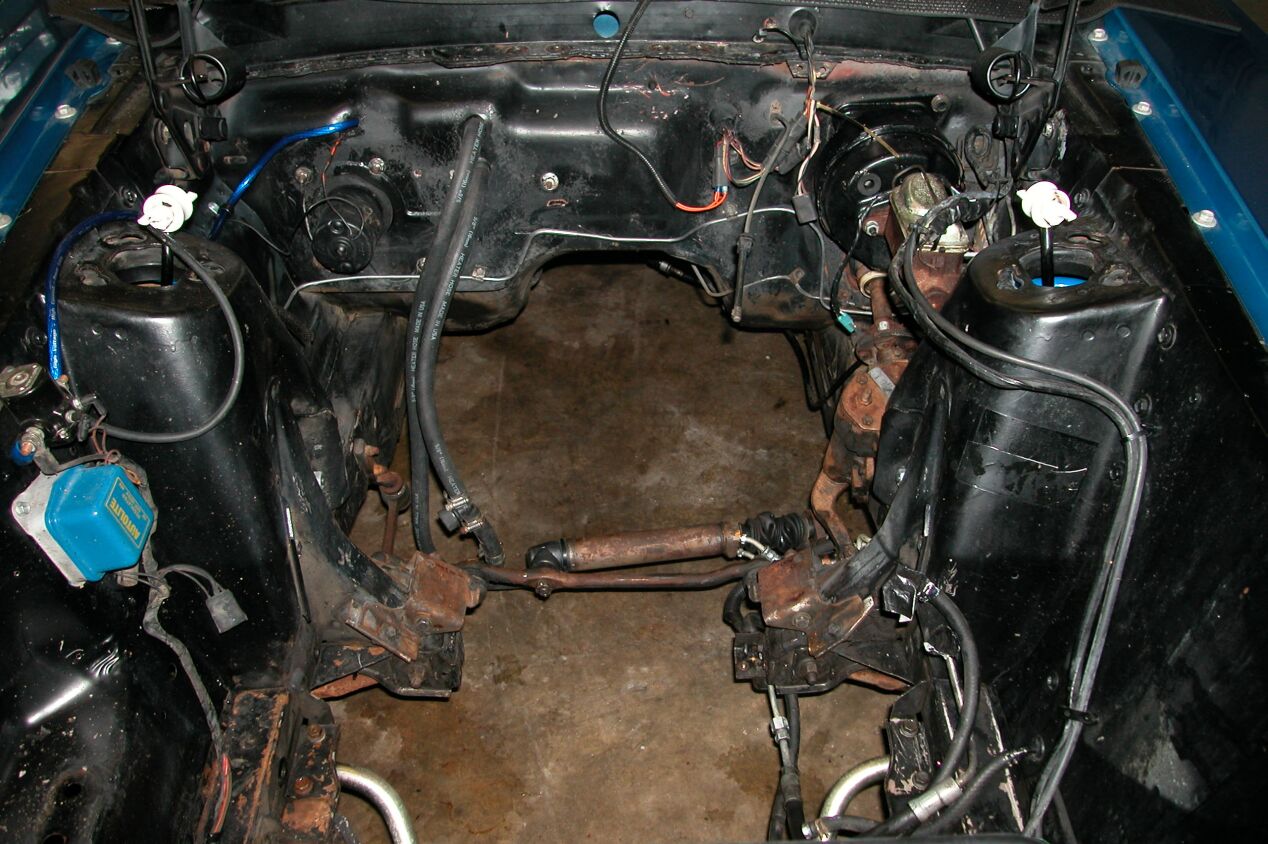
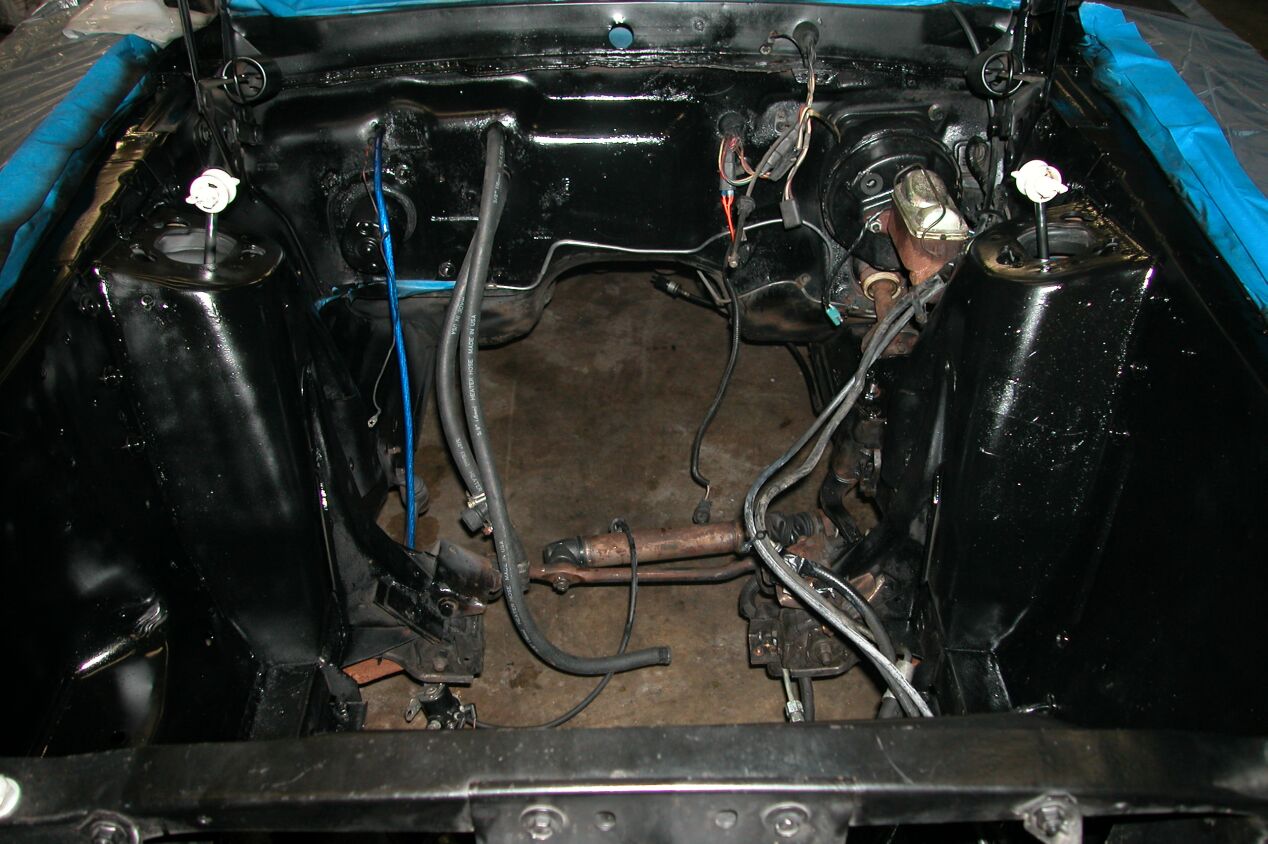
This is the engine compartment after pulling the original engine. Not too bad considering the age of the car and almost 200,000 miles
Cleaned, sanded and painted. Wanted to make it nice, but not too nice that I didn't want to drive it. All the pictures below are with the intention of using carburetion. As with all my projects, I can't leave well enough alone. Fuel Injection came about a year later.
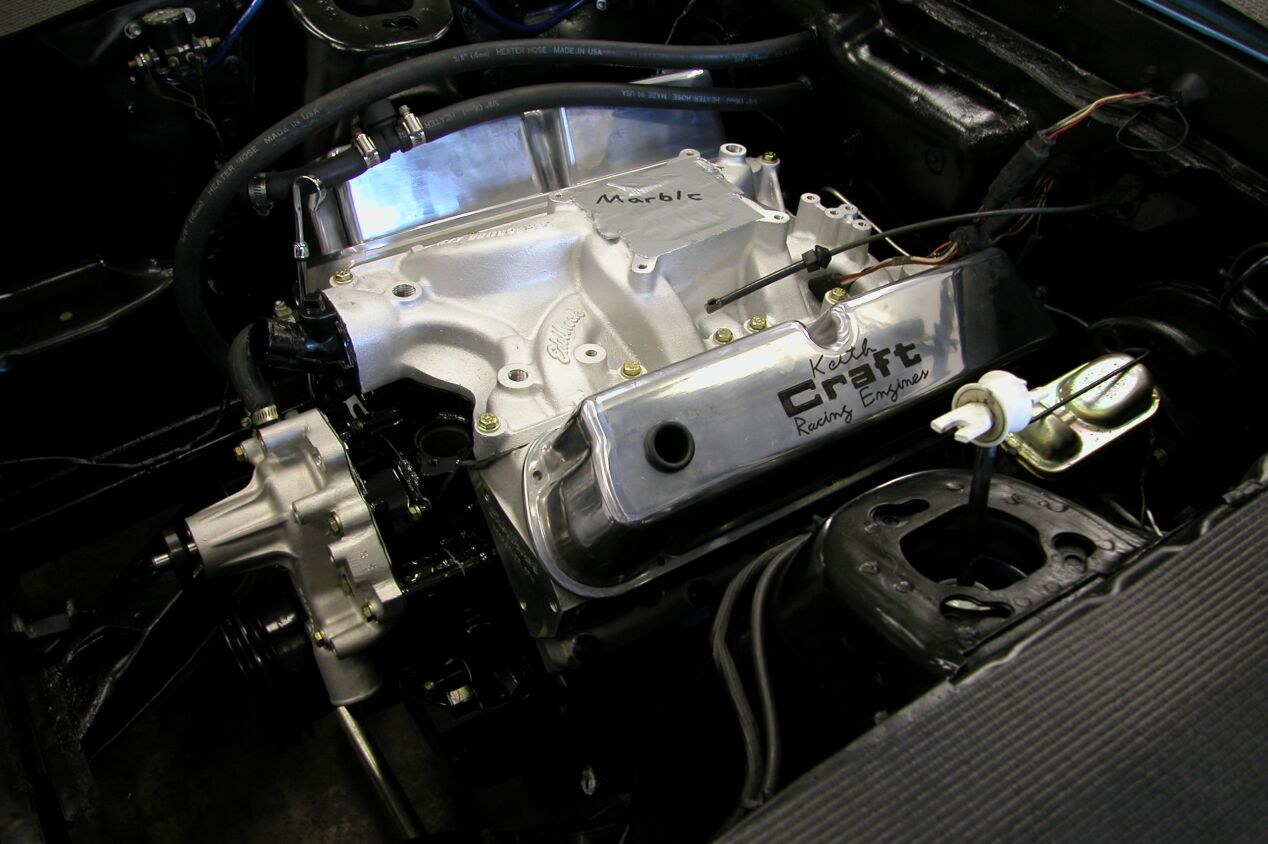
The Keith Craft "Bullet". 408 c.i. 10.0:1 Compression. Edelbrock Heads and Intake.
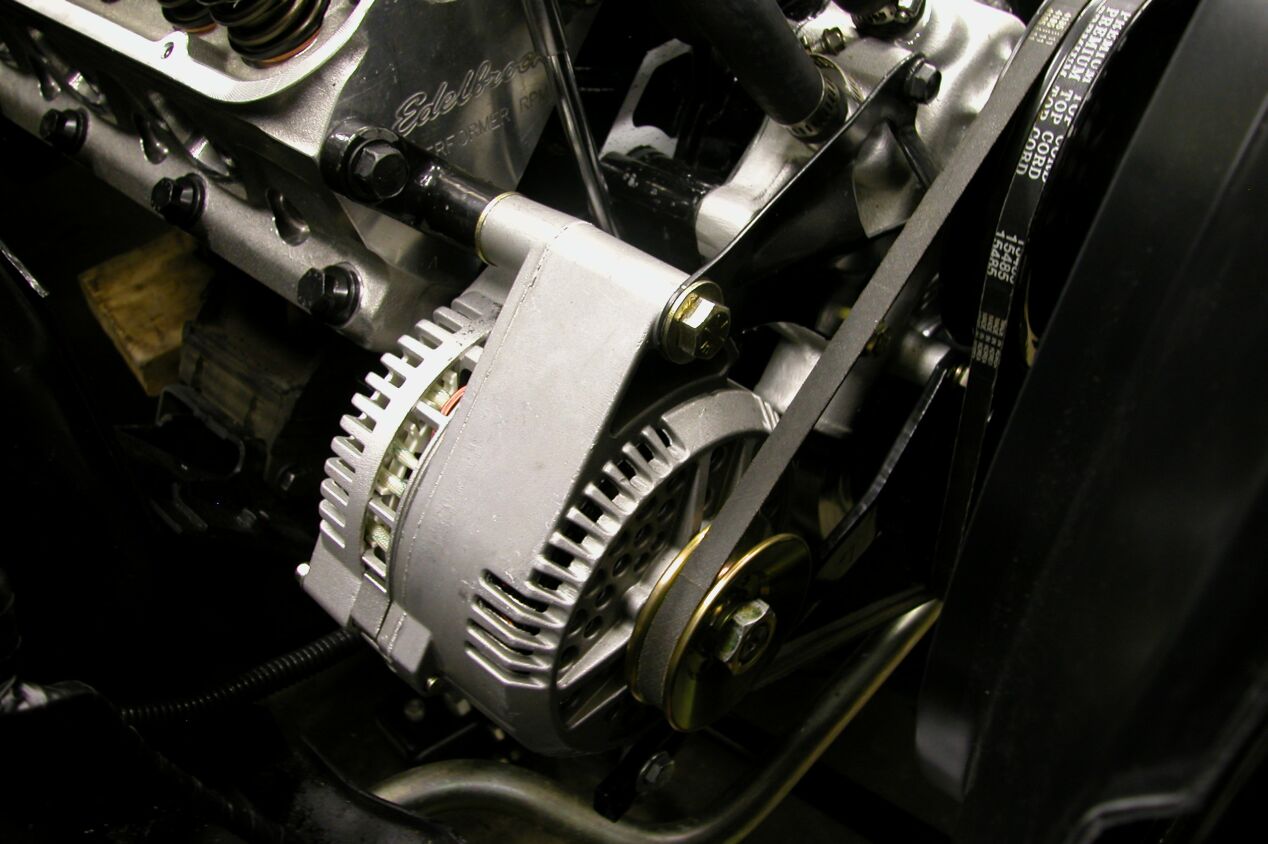
Mr Amp 130 amp 1 wire alternator. Contact me before you try this mod and I'll save you some time.
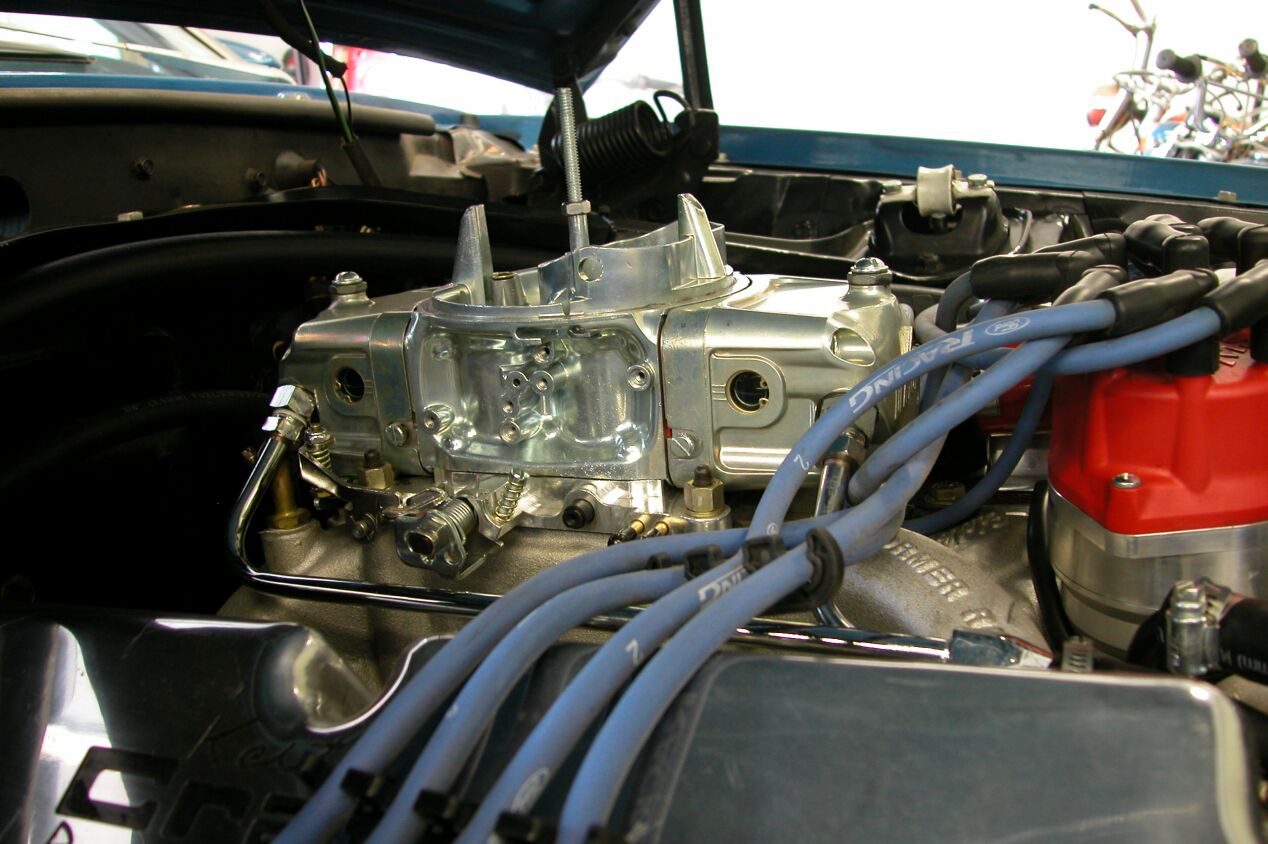
Barry Grant- Demon Carburetor
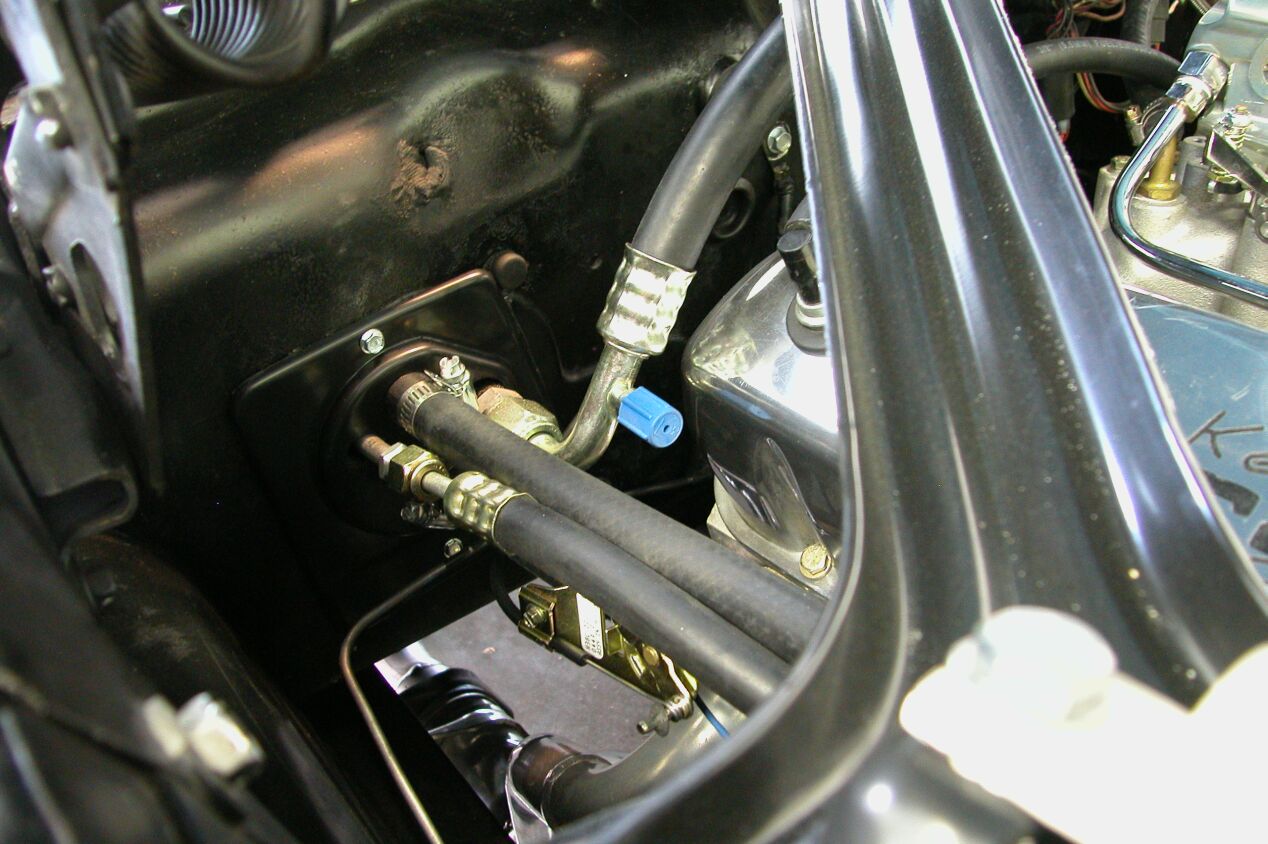
All the nice neat plumbing for the Vintage Auto Air System
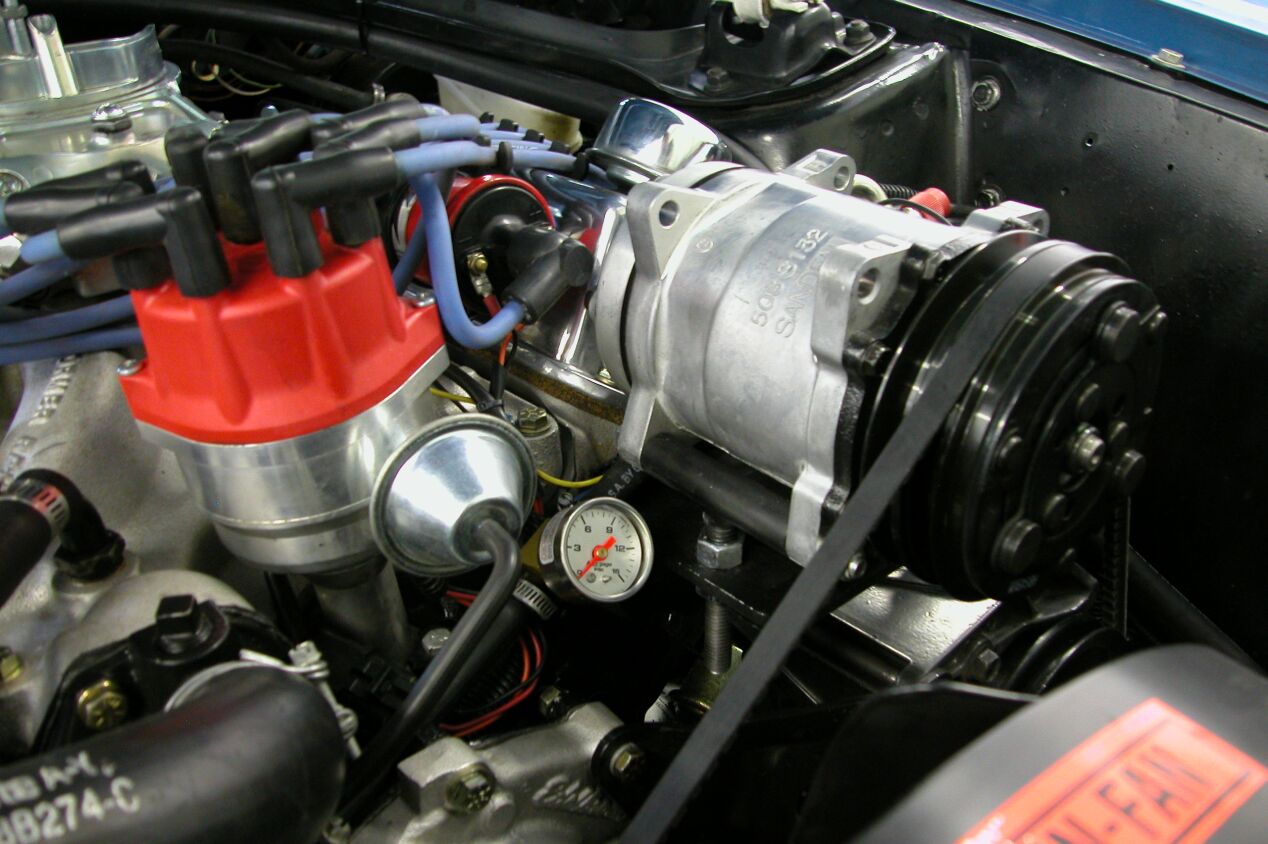
Sanden R-134 compressor and shot of Autometer Fuel Gauge
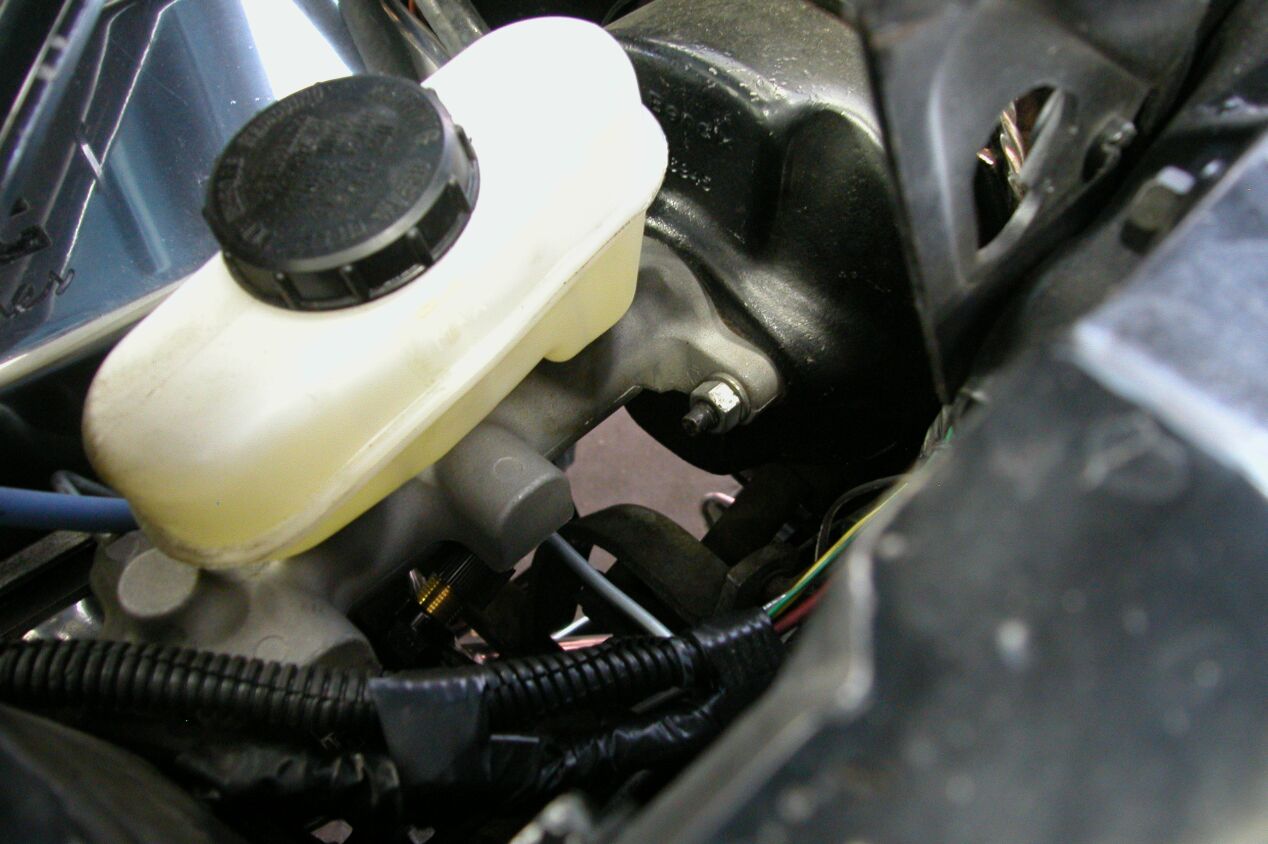
Master cylinder that came with the Baer Brakes. Proportioning valve is tucked underneath, out of sight
Engine Pic
MSD Billet Distributor
Engine Pic
MSD 6A-L
Marblesmotors ©2004 |
|